
Thai Dance Knowledge: Creating Stage Performances from Local Stories
The Faculty of Fine and Applied Arts at Suan Sunandha Rajabhat University shares a guide to creating Thai dance performances, helping students and interested readers explore how local stories, ways of life and cultural identities can inform work for the stage. Behind-the-scenes footage from “Walukanin Thin Burapha” accompanies the guide.
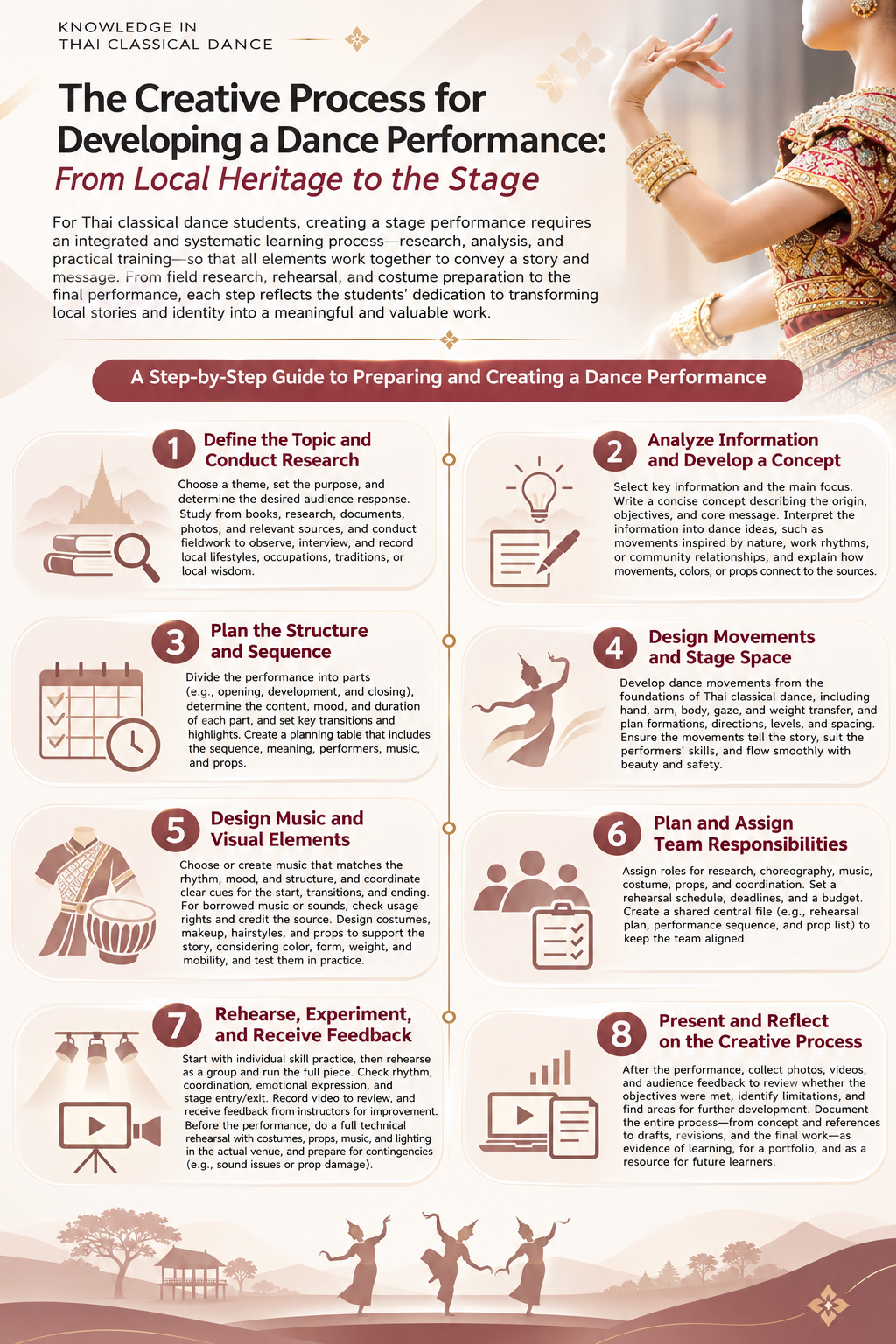
Creating a performance involves systematic research, analysis and practical training. Choreography, music, costumes and other production elements must work together to communicate a coherent artistic concept. The following eight steps offer a framework that students can adapt to their own projects.
1. Define the Topic and Conduct Research: Identify the story, the reasons for presenting it and the intended audience response. Consult books, research, documents and relevant learning resources. For projects concerning local communities, conduct field observations and interviews with knowledgeable people. Record sources, distinguish facts from opinions and obtain permission before taking photographs or conducting interviews.
2. Analyse the Research and Develop the Concept: Select information that supports the central message and write a clear concept statement explaining the background and objectives. Movements in nature, working rhythms and human relationships can inspire a movement vocabulary. Each artistic choice should have an identifiable connection to the research.
3. Structure the Performance: Organise the work into an opening, development and conclusion. Define the content, mood, duration and transitions of each section. A planning table identifying performers, music and props can help the team establish a shared understanding before rehearsals begin.
4. Develop Choreography and Spatial Design: Build on Thai dance foundations to create movements that express the concept. Explore the use of hands, arms, torso, gaze and weight shifts alongside formations, directions, levels and spacing. Consider the meaning of each movement, the performers’ abilities and their safety.
5. Design Music and Visual Elements: Select or create music that supports the mood and structure, with clear cues for beginnings, transitions and endings. Check permissions when using music or recordings created by others. Costumes, makeup, hairstyles and props should reinforce the narrative and be tested for weight, freedom of movement and stability during performance.
6. Plan the Work and Assign Responsibilities: Allocate responsibilities for research, choreography, music, costumes, props and coordination. Establish rehearsal schedules, deadlines and a budget. Maintain shared production documents so team members can follow progress and coordinate their work.
7. Rehearse, Test and Refine: Progress from individual practice to group rehearsals and complete run-throughs. Review timing, coordination, expression, entrances and exits. Use rehearsal recordings and feedback from lecturers to refine the work. Before the performance, rehearse with costumes, props, music and lighting in the actual venue and prepare responses to possible production problems.
8. Present, Evaluate and Document: Collect photographs, recordings and audience feedback to assess whether the performance achieved its communication objectives. Identify limitations and opportunities for improvement. Preserve research sources, concept statements, sketches and revisions as evidence of learning, portfolio material and resources for future projects.
The footage from “Walukanin Thin Burapha” offers a glimpse into the relationship between local research and creative dance practice. The framework above can be adapted to suit the subject and context of each performance.
Video courtesy of Thanistha Wongkaew, a second-year Thai Dance student, Faculty of Fine and Applied Arts, Suan Sunandha Rajabhat University.
Public
Relations, Faculty
of Fine and Applied Arts, Suan Sunandha
Rajabhat University
FAR
Website: https://far.ssru.ac.th
FAR
Facebook Fanpag : https://www.facebook.com/FARSSRUfanpage/
Twitter
: https://twitter.com/pr_far
Instagram
: far_ssru_fanpage
TikTok :
@farssru
SSRU Website : www.ssru.ac.th